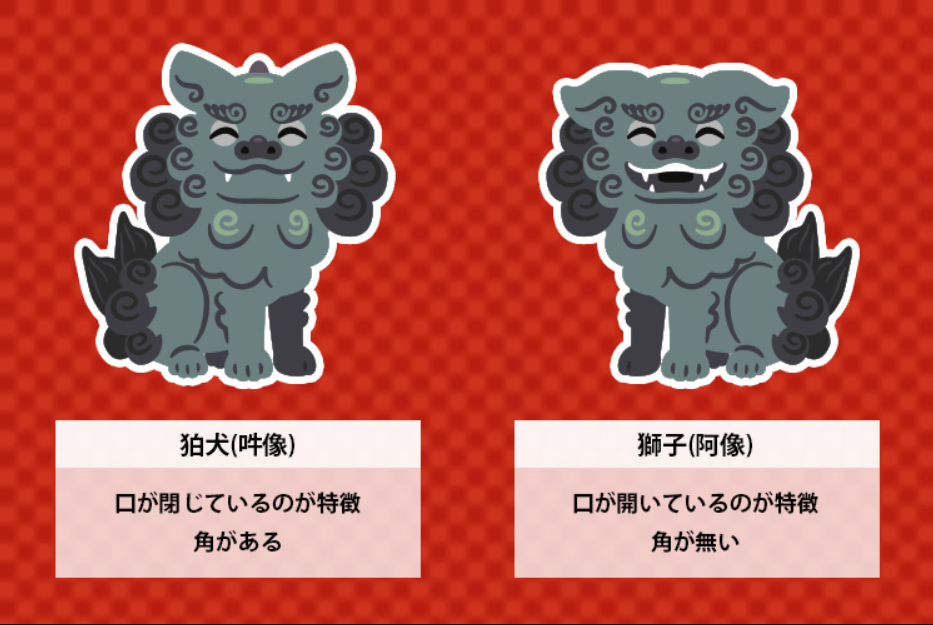
What is the difference between the 2 lion dogs other than the names?
I know one is normal main Japan and the other is Okinawian in the Ryukyu islands. But I still don't understand why there are 2 different lion dogs in 1 country. Does anyone know what's happening?
TLDR: こまいぬ guard Shinto shrines; シーサー guard homes, and (to my understanding) have a stronger connection with good fortune, not just 魔除け. The difference is likely due to the Ryukyu Kingdom being independent for a very long time. General origin is the same.
狛犬 (こまいぬ) are guardian statues associated with Shinto shrines. Originally, the term referred specifically to the statue on the left, with its mouth closed.
獅子 (しし) refers to its counterpart, traditionally placed on the right, with its mouth open.
※ Over time, "こまいぬ" came to be used for both statues collectively.
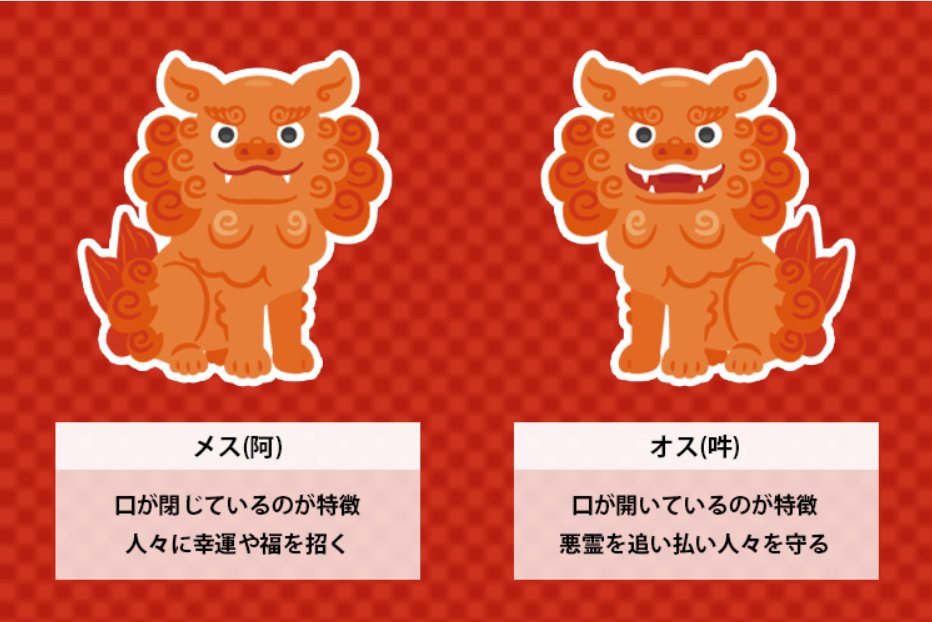
シーサー are similar guardian statues found in Okinawa, traditionally placed on rooftops or near the entrances to homes to ward off evil spirits. They're also associated with bringing good luck and protecting the household.
All three are based on lions. The idea of lion-like guardian figures is thought to have originated further west, possibly in ancient India or the Middle East (one source mentioned Ancient Egypt), before spreading eastward to China and eventually reaching Japan (and Okinawa) through the Silk Road and (possibly) via the Korean Peninsula.
Edit: My understanding is that they developed somewhat differently in Okinawa because the Ryukyu Kingdom was independent for centuries, with strong ties to China. The roots should be the same though.
There's this quote that gives you some interesting information:
(left-side: good luck, fortune) 左側のシーサーの特徴は口を閉じており、これは「人々に幸運や福を招いてくれるもの」と考えられています。 (right-side: protection, warding) 一方、右側のシーサーは口が開いていることが特徴です。こちらは悪霊を追い払い人々を守るものと考えられています。



 (me when I think there is chaos)