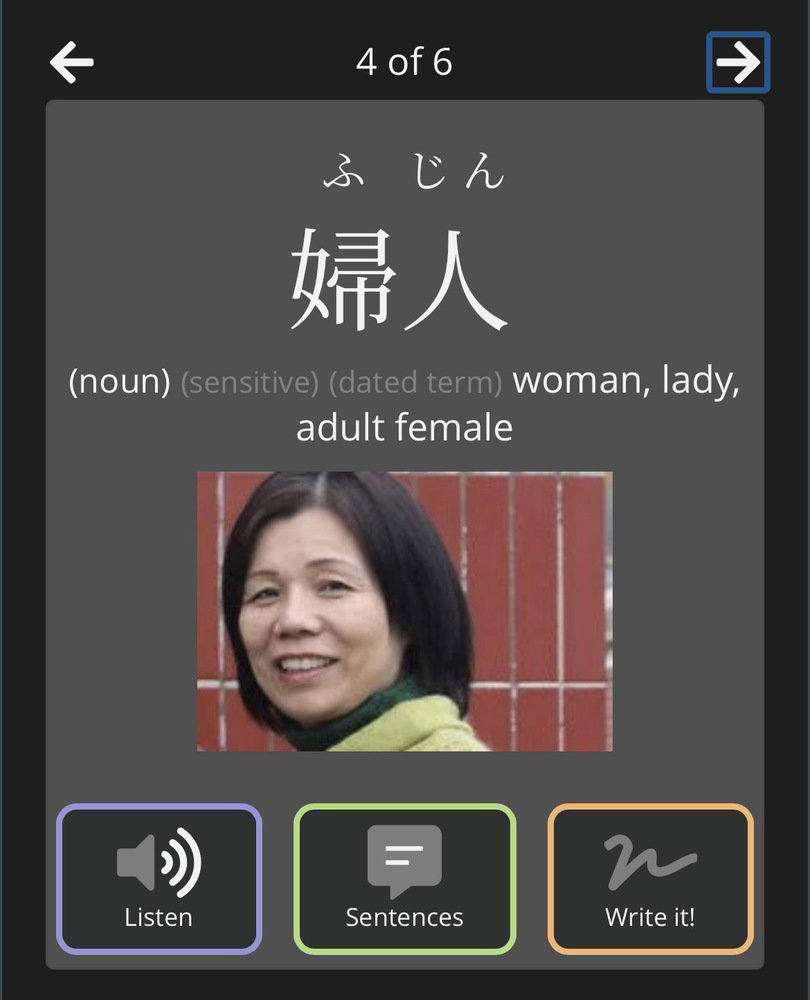
I encountered this word and wanted to know the social context of it. I tried asking on Discord, however I never got a response and felt like it was rude/spammy to try to ask it again there.
I quite literally never hear it used unless it's in the context that the usage notes describe. You pretty much just don't use it. You do see it in compounds though: 婦人服, 婦人科, 婦人会.
Were you asking for more context than the usage notes provide?
Looking around it looks like it's considered "sensitive" because it's an older, institution-style term that frames women as a formal social category (often tied to traditional roles like wife/community member), so it can sound impersonal or dated when used about individuals today.
@ギョルギ九十三 You gave more context than in the usage notes so I’m satisfied with your answer. So I’m guessing it’s not really useful except in those compounds you mentioned or if looking into historical documents.
I do find it interesting that there’s a counterpart for “gentlemen” called 紳士 that’s not considered dated, although most people don’t use it nowadays, probably.
The thing is, 婦人 and 紳士 aren't really parallel in modern usage, even if they look like they should be.
婦人 as an independent noun isn't really "useful" in a modern, everyday conversational sense, although it can *technically* still be used to refer to a woman in certain formal contexts, usually as ご婦人. The native sources I read weren't particularly clear on when or why you'd use it, so I'd probably just avoid it altogether.
As for 紳士, it's still very much alive as a social concept word. It simply means "gentleman" in much the same sense as the English word. You see it in words like 紳士的 ("gentlemanly"), and people also use it jokingly or rhetorically, e.g. 紳士として~ (as a gentleman) or 紳士だから~ (because I'm a gentleman). I actually hear it relatively often.
So while 婦人 feels dated outside of certain set expressions and stylistically restricted contexts, 紳士 doesn't really carry that same impression.